Making Sugar (part 2)

In Part 1, we got the cane from the field, unloaded it at the mill, chopped up, and now… into the mill it goes.
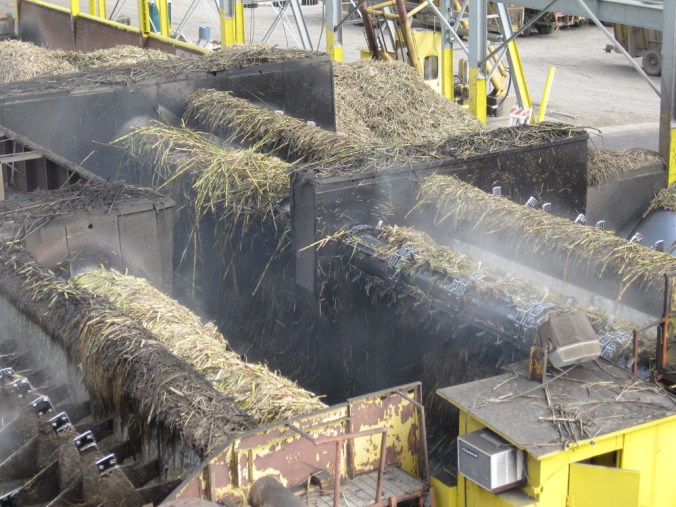
a-crushed-outside

Cane is crushed before it even enters the mill.

The cane is pretty much pulverized along the way, and the juice extracted.  In another part of the cane mill complex, a core laboratory is analyzing samples from each load of cane to determine sucrose, moisture and other factors which indicate the sugar yield from each truckload.  The cane is pulverized through the mill – usually involving a series of rollers – and the juice is extracted.  The remaining pulp is called bagasse, and is usually incinerated to fuel the running of the mill.  There’s an awful lot of bagasse, though, and the sugar content means it will ferment quickly – there’s that stench a lot of people complain about.

a-bagasse

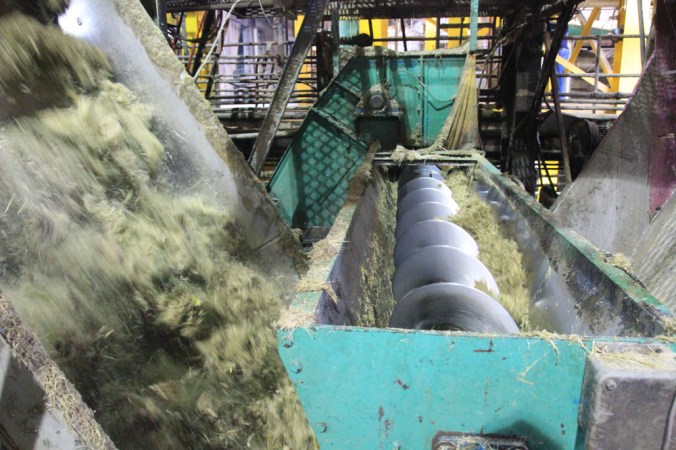
Ground cane being processed

a-grinding

Ground cane being processed (more!)

The juice itself is like any other raw juice – a thin liquid, and frankly, not exactly clean.  It’s cleaned up with slaked lime, and the dirt settles out and is usually returned to the fields.  The juice heads off to evaporators so that it can be boiled down.
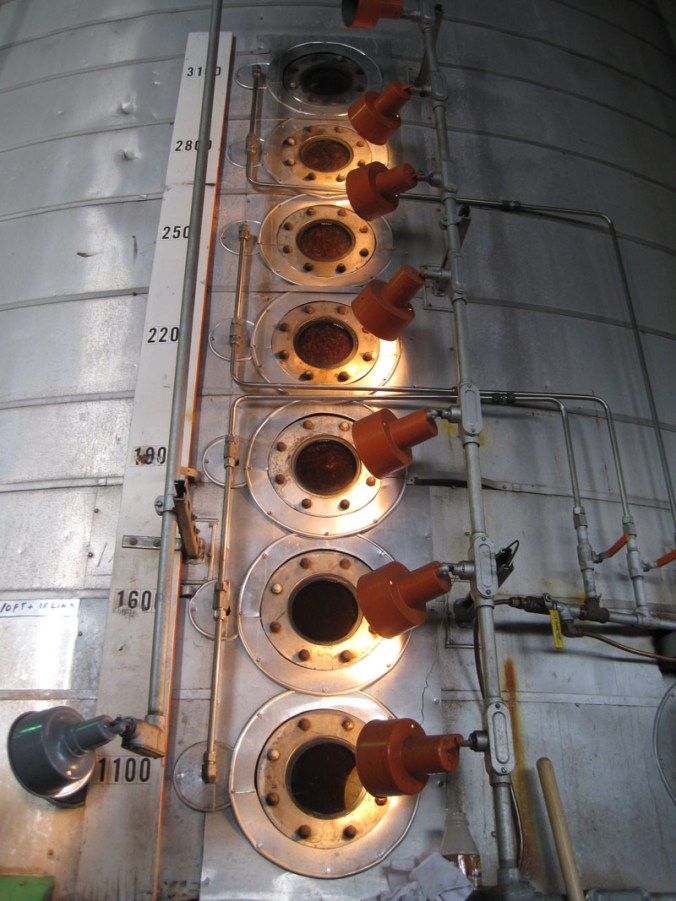
a-boiler

Bubble, bubble, boiling sweetness!

If by now you have the idea that a sugar cane factory is a large, hot place with a lot of very massive machinery…you’re right.  Most of the “smoke” people see billowing out of the plant is steam, and both air and water exhaust is monitored and must meet environmental regulations.

Making sugar is an art as well as a science.  It’s one thing to boil the juice down into syrup; it’s something else to coax it into crystalization. It’s a tricky process.
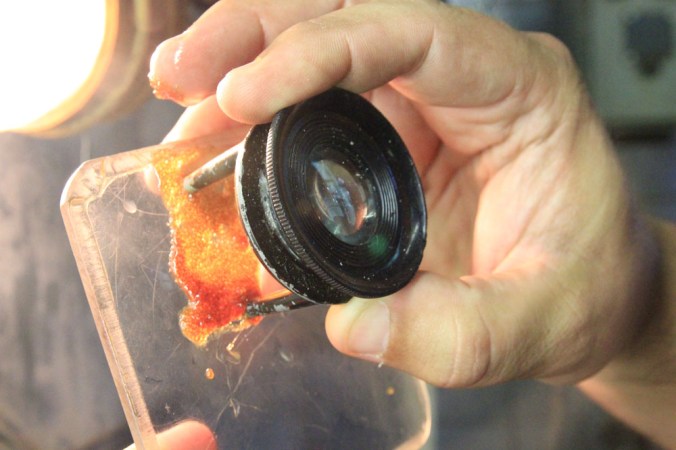
a-checking

Checking crystals

Once the magic of crystalization happens, the syrup heads to centrifuges where the crystals are separated from the liquid.  Voila! Raw sugar, which is dried and sent to a warehouse.

a-centrifuge

Taking a quick sample from a centrifuge.

Louisiana is home to 11 sugar factories which produce raw sugar, which is sent to refineries that will produce refined sugar and similar products.  Because of the sugar content of the cane, it must be processed quickly after it is cut.  The raw sugar is usually stored in warehouses until it can be shipped to a refinery.

a-warehouse

Cane goes from the mill to a warehouse on a conveyor belt. It pours into a mountain of sugar.

a-truckload

At the warehouse, the sugar is transferred to dump trucks, which take it to barges, which will take the raw sugar to a refinery.

I often wonder who figured out that the tall, thick cane held this amazing sweet stuff in it.  Since cane was introduced into Louisiana, I don’t think it was the same brave soul who looked at a crawfish and said “I wonder how that tastes?”

So when you sit down to enjoy something sweet this Christmas or Hanukkah, take a moment to think of all those who had a hand in your holiday baking. Chances are many of those folks are at work on Christmas day, because grinding doesn’t stop until all the cane is done. Think about all of those who’ve had a hand in your entire holiday meal, no matter how extravagant or simple, and say a prayer of thanksgiving.

Now I’m going to post this and bake some Christmas cookies with – yep, you guessed it – home-grown Louisiana raw sugar.

Note – all photos © B. D. Lowry; all rights reserved.  Please contact me for use.
Stay grateful, my friends.

Here it is, Thanksgiving Eve, and I’d like to say that I’ve written an insightful, well-thought-out, finely-crafted post on gratitude.

However… an outdoor fire and a margarita called my name. I’m weak, human, and subject to temptation. Instead of writing, I sat around said fire with the margarita, family and friends, and a Sonic hamburger (and mosquitoes).

We’ve much to be grateful for in the simple things.  So instead of writing, I thought I’d just share some photos of just a few of the many everyday things I’m grateful for.

canal

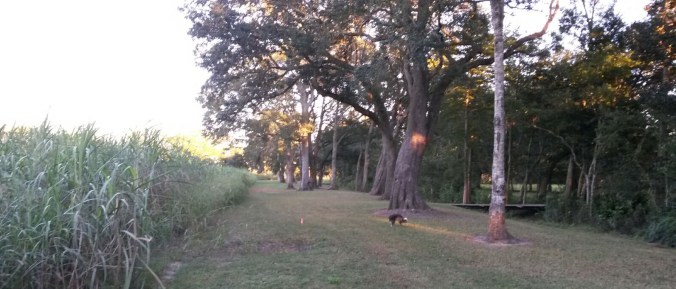
An evening walk with my dog.

2016-flood-la

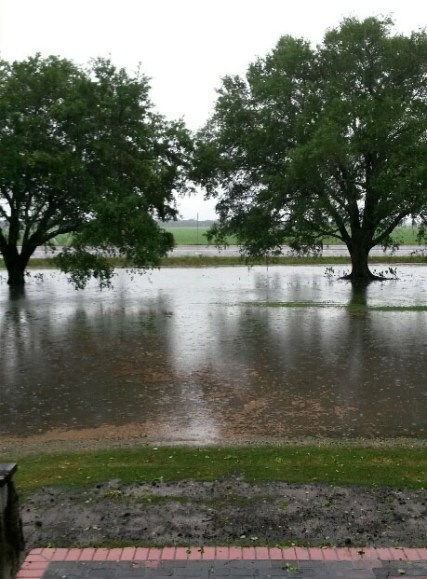
The August flooding didn’t get bad at all here.

planting-cane

Planting cane.

turtle

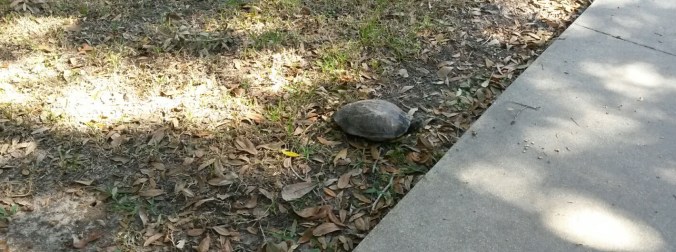
This little guy by my office. Fortunately, he’s not far from home.

avery-island-birds

Bird sanctuary at Avery Island, Louisiana.  Yep, I’m 15 minutes away from where they make Tabasco.

cane1

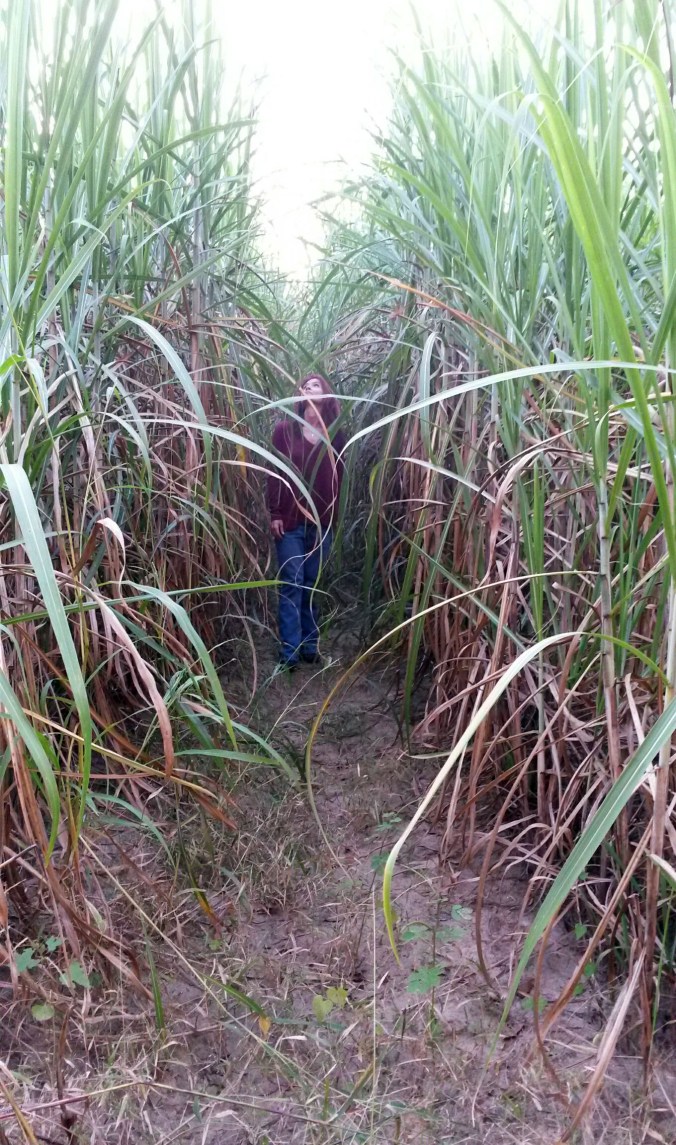
Sugar cane, by home.

hauling-cane1

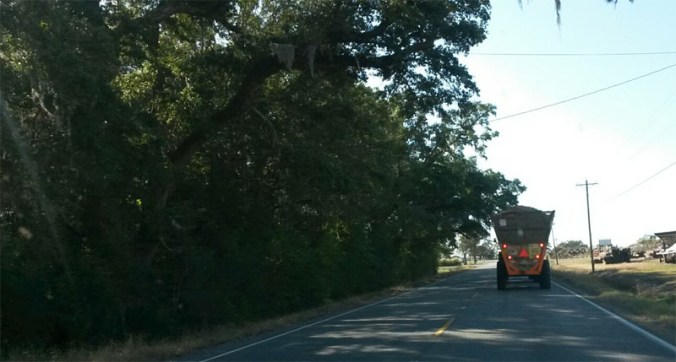
Harvest time, hauling cane to the mill.

ribbit

This little fella by my kitchen door. He sings, too.

pecan-island

A route in Pecan Island, Louisiana.

stormy-weather

Rain for the cane. (Sugar cane fields)

sunset-1

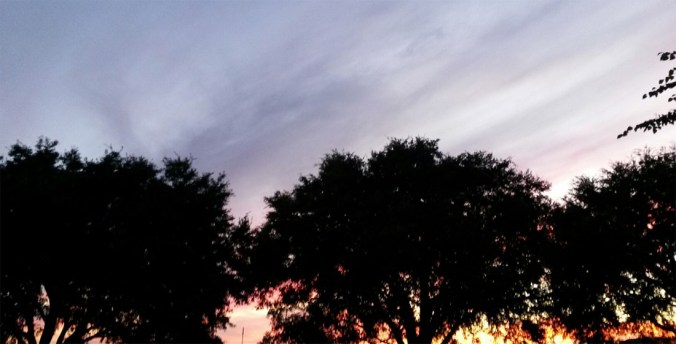
Sunset seen from my front porch.

morning-walk-in-south-la

The view on my morning walk to work.

Life is filled with challenges, trials, fearful things, obstacles and broken dreams.  There will always be an unsoothed ache, a hidden hurt, a lost chance.

Thankfully, there will also be more beauty, chances, hope and love in life, in plain sight, waiting for us to grab it, share it, celebrate it.  The choice of where to look is up to us, and I prefer to see the beauty and hope in the world.

Stay grateful, my friends.

Live Steam!

For some years my brother Greg has been after me to attend the Soule’ Live Steam Festival in Meridian, MS.  Now, you’d have to know my brother (and some of you do). Like my husband has the “guys at the camp,” with Greg it’s “the guys at the shop.”  The guys at the shop, however, have an affinity for steam engines and just about anything that’s large, heavy, made of iron and runs on steam.  (Or gasoline. Or diesel.)

The Soule Live Steam Festival is an annual event held at the historic Soule Steam Feed Works / Mississippi Industrial Heritage Museum the first weekend in November each year. It’s a delightful, educational, family-oriented event, and visitors will see many steam engines at work.

soule-sign

Greg and his friend Eddie brought several of Eddie’s steam engines, and they weren’t the only exhibitors.  But the heart of the event is the Soule Steam Feed Works itself.  The company manufactured machinery and steam engines for the lumber industry from the late 1800s through the first part of the 20th century.  At that time, steam was king – and it was portable.  Soule’ built a rotary steam engine that was portable.  A visit to the factory/museum is a step back in time, but not quite so far back as one might think.  Steam is still used in manufacturing – in south Louisiana, steam runs the sugar mills that grind cane and product syrup and raw sugar.

At Soule, steam fans come together, along with railroad afficionados.  The railroad station is close by the steam works, and the weekend also hosts Railfest, a short walk away from Soule Steam Feed Works.

some-steam

Some of the more portable engines on exhibit at Soule’.

I attended on Saturday, and in addition to steam engines and a look into a not-so-distant  manufacturing past, the event hosted several attendees and exhibits from the Carousel Organ Association of America.  THESE INSTRUMENTS ARE COOL.  I’ll admit, this was a deciding factor for me.

Greg: “lots of steam engines!”

Me: “more than you and your friends have?”

Greg: “Yes.”

Me:  “ARE YOU SERIOUS?”

Greg: “They also have carousel organs. They’re neat.”

Me: “I’M IN!!!!”

carousel-organ

Yes, it’s a functioning baby pipe organ.
There was nonstop carousel organ music in one of the large workshops.  At one point, two organs played a duet – which was fairly excruciating, because one was tuned to C and the other to Eb.  Ouch. Somewhere Over the Rainbow sounded more like Somewhere under the Stormy Weather.

I can also say that I’ve now heard Lady Gaga’s Bad Romance on carousel organ. I couldn’t stop laughing. (You can find out more about the carousel organs here: http://steamfest.weebly.com/ ) A gifted bagpipe player also provided wonderful musical entertainment on the grounds. (I love bagpipes, so this was a real treat!) The museum had historic printing demonstrations, a spinning and weaving display, and a broommaking machine. I even brought home some freshly ground cornmeal, ground on site by one of the exhibitors.

steam-engines

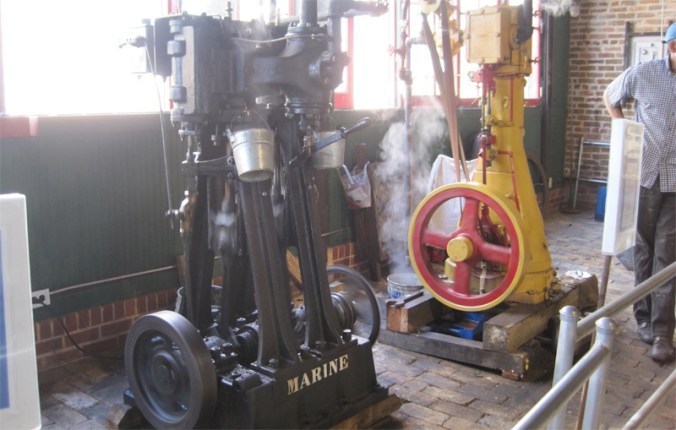
Two of the many engines on display in the museum.

Right before sunset, Alabama Art Casting held a demonstration of melting, pouring and casting iron.  “Industrial heritage”is a term you don’t hear everyday, but think about it.  Progress is made by industry, and industry is born out of humanity’s desire to make life better and easier.  The “Industrial Revolution” isn’t just something taught in school; this is how our country – and others – were built.

iron-pour

Molten iron, poured from furnace into a heated crucible.

Later in the evening, we attended the volunteers’ dinner at the Temple Theater.  This is an historic theater, built in the 1920s in “Moorish Revival Style” by Shriners.  The barbeque was delicious, and just being in this beautiful place was a treat. Visit their website at https://templetheater.wordpress.com/

But it got better. After dinner, we were treated to an organ recital and silent movie – with live organ accompaniment.  The theater has its original Robert Morton organ, and we sat back to watch a Buster Keaton classic – with a live organist providing the soundtrack.  What a treat!  Greg, Eddie and I agreed that it was an outstanding weekend, with the guys pronouncing this the “best ever” of the numerous Live Steam Festivals they have attended there. Visit their website here: http://www.soulelivesteam.com/home.html – if you can’t make it for their festival, they offer tours throughout the year.  It’s well worth a visit.

I drove home Sunday in a car scented with cedar – one of the exhibitors had a large lumber saw set up (powered by a steam engine) and was milling lumber.  Leftover cedar shavings were there for the taking, and they’ll provide great garden mulch. All because of the power of steam! sawmill

During our regular weekly prayer group the other day at the Sacred Center, we had a guided meditation that brought up the image of fire.  My recent steam adventure came to mind. Nearly everything I’d seen last weekend had been powered by steam and fire.  During our subsequent discussion, I mentioned my trip to Meridian and the Soule Steam Festival.  These are massive machines, all run on steam power. We can think of fire as being consuming, cleansing…but also transformative, an agent of change, and a source of power and energy.  Just as fire can provide incredible energy, a spiritual fire can refine us, and it can also magnify our strength to do what may seem impossible.

– – – –

See some sights and sounds of the event, including Bad Romance on a carousel organ:  https://youtu.be/RS2Xl_tGB1Y  (you may have to copy and paste)


The Quagmire

I told myself months ago that I wasn’t going to get into political musings on this blog. So this isn’t intended as a political discussion, but rather my own musings on trying to “remain untainted” by the dirty business of politics in our flawed world.

I often hear comments like “I avoid politics” and “I vote, but that’s it.” Sometimes I think that may mean “I vote, but don’t actively engage in supporting specific candidates.”  Fair enough.  Or perhaps it means “I don’t want to talk about it.”  I can understand that, too.

happy-dog

To ease the pain of a political post, here’s a photo of a happy dog. You’re welcome.

But what if it means “I’m going to vote the way I always do because I don’t want to be exposed to the negative energy of the election?” Therein lies the spiritual challenge to each of us.

In writing this blog, I try to apply spiritual principles to everyday life.  I subscribe to the idea that I am what I think about most – and who wants to think about politics?  It never ceases to amaze me how we can wind up with so many candidates for so many offices that disgust us so much. “I avoid all that! I don’t want to go there!”

Neither do I, but I do. It is one of the challenges of living as a part of a community, one of the lessons we as humans must learn. To say one is disengaged from the political process “but vote, and that’s it” is to abdicate power and participation in the process.  It’s irresponsible.

We hear much in the media about “uninformed voters,” which can mean “someone who doesn’t vote the way I do.”  Unfortunately, most major news outlets are extremely biased, and even closely following major news outlets does not necessarily result in being informed.

Personal disclaimer: I did not vote for either presidential nominee in the primary. So, I am one of those who may be tempted to not vote, or to write in the name of my initial choice.  But I won’t. (Didn’t. I voted early.)

blue-dog-vote

Louisiana’s “I Voted” sticker. Not necessarily a political commentary…

WikiLeaks.org and projectveritas.com have released (and continue to release) bombshells.  I won’t use this space to dig into the findings of either of those websites – why deny you the fun of doing it yourself?

Here’s where our challenge comes in.  United States citizens have a right to vote.  It is also a responsibility, not to be taken lightly.  Don’t give up the opportunity to learn as much as possible about the candidates presented because it’s depressing and you really don’t like either one of them.  If we took that attitude towards all distasteful tasks, the human race would have died out long ago because dealing with babies means dealing with a lot of merde.

whew

I also urge you to avoid the easy way out.  “_______ is a ________!”  Ask yourself truly: am I just repeating a soundbite?

No candidate is perfect.  We are all flawed human beings, and most of us do NOT live our lives planning a run for political office.  Somewhere along the line, we’ve pissed some people off with careless comments.  We may have mismanaged our own affairs – which provides one with great lessons.  Some of the “regular” questions are easy to ask: What has A achieved?  What is B’s stance on C?  

The big questions facing us about our candidates are ones we never thought we’d ask, and hate the idea of having to address them: Has X seriously endangered national security?  Can Y be bought?  Did Z commit treason?

Am I making the right decision?  Is there a right decision in this election?

Yes, I do believe there is. There is no perfect candidate, so each must voter choose an imperfect one. I am reminded of Louisiana’s 1991 gubernatorial election: “Vote for the crook, it’s important.”  A choice between Edwin Edwards (who was later convicted for racketeering and served 10 years in a federal penitentiary) and former KKK wizard David Duke taught me to never say never.  I didn’t like Edwards, but I held my nose and voted for him anyway.

Jesus hung out with sinners, lepers, prostitutes, tax collectors and took on the establishment of his day.  He didn’t let the “bad energy” dissuade him from bringing light into the world.  King David was a pretty flawed guy, but did great things for God anyway.

I’ve always said you couldn’t pay me enough to run for political office – I wouldn’t even run for dogcatcher, as the saying goes.  (I’d want to take all the dogs home!) Politics challenges us as individuals, and as spiritual beings.  We want a world with peace, equality, hope, opportunity, love, religious freedom.  We don’t want to have to go “slumming” in the stinking gutter of the political quagmire and would just rather steer clear of it all. We don’t want to have those discussions with friends that vote differently from us. We say why can’t we just all get along?

This is the human condition, so participate. Pray for the process, our country, and the candidates. Don’t sink low. Realize that you can dive into the yuckiness of politics and still be a light in the world.  In spite of her flaws, America is still an example of freedom in the world.  Exercise your free will and vote.

reagan-quote-spiritual

Above all, we must realize that no arsenal or no weapon in the arsenals of the world is so formidable as the will and moral courage of free men and women.
–Ronald Reagan

Become the prayer for goodness your lips have uttered.

A couple of years ago I wrote about singing at Temple Gates of Prayer in New Iberia, La. There is a small Jewish congregation here, and I have been blessed and honored to sing for their rabbi-led services for some time.  Fall is the season of High Holy Days, which encompass Rosh Hashanah, Shabbat Shuvah and Yom Kippur.

This is a Reform congregation, who uses the New Union Prayerbook.  There are many beautiful prayers within the covers of the regular book as well as Gates of Repentance, used during HHD.

Monday, during the morning service for Rosh Hashanah, these words leapt off the page at me:

“Be among those who cherish truth above ease, and whose prayers are shafts of light in the darkness….Aspire to be loving, compassionate, humane, and hopeful.  Become the prayer for goodness your lips have uttered.” *

Become the prayer for goodness your lips have uttered.

Sounds deceptively simple.  It’s certainly challenging.  I know I am often overwhelmed with day-to-day minutiae, and tend to get onto the “just get-it-done” track.  I’m not rude, cruel, dishonest or treating anyone badly, I’m just…getting things done.  Work. Errands. Housekeeping. Paying bills. Doing laundry. Autopilot.

peace-window-temple-gates-of-prayer

Peace window in memory of Jack Wormser, who was a man whose life was his prayer of peace.  Temple Gates of Prayer, New Iberia, LA

The apostle Paul wrote:

Rejoice always, pray continually. ~ 1 Thessalonians 5: 16-17

What if we were to become the prayer?  I cannot bring peace to the world, but I can be peaceful.  I may not be able to cure someone, but I can be a healing presence. Kindness towards others – even a smile – can be prayerful.

Intention is the difference.

Now, more than ever, our country and our world are torn by voices of division.  We hear so much about what’s wrong, about oppression, aggression, unfairness, shaming, blaming, hatred.  Individual pain is exploited for political gain, and groups and individuals become game tokens in power plays.  Individuals wonder what can I do?

snail-1

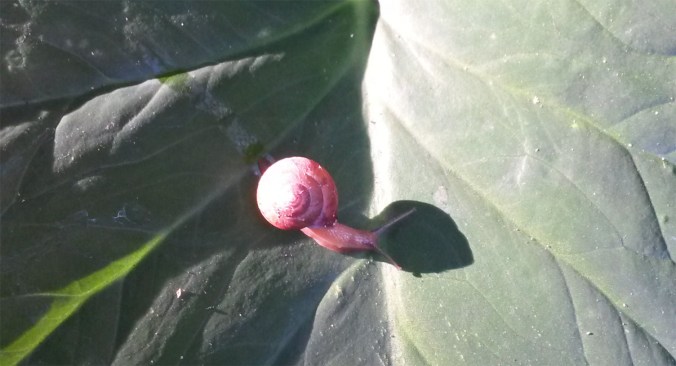
Make a difference.  Even this snail makes tracks.

Do what you can. Be open and aware.  Set an intention for kindness. Show gratitude.  Smile.  Pray continually.

Then, become the prayer for goodness your lips have uttered.

~~~~~~~~ * 1984, Central Conference of American Rabbis: Gates of Repentance: The New Union Prayerbook for the Days of Awe.  P. 187.  (New York)

Armor of God

I recently met a lovely woman, V, in a centering prayer group. The group meets during my workday, but I attend occasionally when I can slip out for a while. While the group attendance fluctuates, we stay connected through the internet. I, a newcomer, have been welcomed with love, open arms and many emails.

During the recent flooding here in south Louisiana, several group members’ homes were flooded; V’s was one of them.  I’d only met her a few times, but my heart went out to her, as to so many.  Flood recovery is a wet, stinky, moldy, yucky mess and there are no words that accurately describe it. Part of the process of post flood repair is replacing soaked sheetrock.  The ruined parts are cut out, exposing the studs and timbers beneath. An email went out with a request from V to send scripture verses that would be written on the exposed beams before covering them again.

a-scripture

I thought of the V’ahavta:

 Hear, O Israel: The Lord our God, the Lord is one.  Love the Lord your God with all your heart and with all your soul and with all your strength. These commandments that I give you today are to be on your hearts. Impress them on your children. Talk about them when you sit at home and when you walk along the road, when you lie down and when you get up. Tie them as symbols on your hands and bind them on your foreheads. Write them on the doorframes of your houses and on your gates. ~Deut. 6: 4 – 9

Favorite verses were shared, then an invitation – Monday, we’ll gather at her home to help write these verses on the exposed beams.

Monday arrived, and a small group of us had gathered.  We waited, but V never appeared.  One member tried calling, but got her voice mail. Well, phones and voice mail had been very messed up since the flooding, and we just thought that something had come up or AT&T had freaked out. Plan for another day.

Later that afternoon, I heard a news story on the radio that a car had crashed through the wall and into a local post office.

My phone began buzzing with emails.  V wasn’t at her house because she had been at the post office when the car crashed.  She had been pinned between the car and a desk, both of her legs broken.  We stormed the gates of heaven with prayer, waited for news of her surgeries – and continue to pray.

a-glass

Then, in the middle of this, I read a blog post from Beauty Beyond Bones; she is a young woman with a history of an eating disorder.  Prayer and Divine help got her beyond the bleakness of her deadly illness and into recovery.  In her post, she described how her identity had been stolen recently, and spoke of Ephesians 6 – about putting on the full armor of God.  Sometimes you need it!

What is it with these obstacles that fall into the way when one is seeking to fulfill Divine Purpose?  Is it “Satan trying to mess things up?” Or is it something within one’s self, deeply hidden in the unconscious mind that fears and hinders forward movement? I have heard both explanations – and all in between.

If I look at the first option, then “it’s not my fault.” It is something completely beyond my control, and I am a helpless, powerless victim.

If I consider the second, “it’s ALL my fault, but I don’t want this!” Yet on some deep unconscious level I must invite failure. I am responsible for my own downfall.  Gee, I have a lot of power, don’t I?  (haha)

Neither extreme makes much sense to me. It is probably the oldest question ever asked: Why do bad things happen to good people?  Well, we don’t know.  Sometimes, sh*t just happens.

a_god-beauty-camp

In spite of everything, God’s world is still a beautiful place.

Perhaps instead of trying to figure it out and control the outcome, we can just roll with the punches.  When you think about it, no matter what you believe, your response can be the same:  Get up, show up, keep going. Don’t stopPut on the full armor of God, and lean on the Spirit which is greater than us and keep going. You – alone – will sooner or later run out of steam, but if you tap into God’s love and power, you have an infinite source. I don’t know about you, but I don’t want to risk it alone.

Somehow, some way, it will work out – and usually in a way that surprises us.  It may not be the way we would have chosen, but sometimes we have an outcome that is more amazing than we ever could have imagined.

Why do bad things happen to good people? I know I won’t get the answer anytime soon, and I’m not even looking for it anymore because I don’t think we can understand the answer (at least not in this lifetime). We cannot understand with our minds, but with our hearts and our souls.  Such things are of faith, and not of reason. I am inspired and deeply moved by faith such as V’s.

When I was a child, I talked like a child, I thought like a child, I reasoned like a child. When I became a man, I put the ways of childhood behind me. For now we see only a reflection as in a mirror; then we shall see face to face. Now I know in part; then I shall know fully, even as I am fully known. And now these three remain: faith, hope and love. But the greatest of these is love.
~ 1 Corinthians 13: 11 – 13

Faith. Hope. Love. This is what the armor of God is forged of.  Put it on, and – like V, and  Beauty Beyond Bones – keep going.

Mary Magdalene: Friend

A couple of days ago I wrote about The Gospel of Mary Magdalene, a part of which was discovered in the late 1800s and eventually translated and published.

Today I consider what has been included in the New Testament about her, and a couple of comments about her two-centuries-old case of identity theft.

– She was a follower of Jesus.
– Jesus healed her – of exactly what, we don’t know. We are told that 7 demons were cast out of her.
–  She was a woman of means, and helped to fund Jesus’ ministry as she and other women followed Jesus as disciples. I can only imagine that she was very much her own person, as following an itinerant preacher wasn’t something that was common for women of that time and culture.
–  She was present when Jesus died. As it was dangerous for anyone to be known to associate with a political criminal, she was risking death by stoning, as were the other women present.
–  She was first to witness the risen Christ.
–  Jesus commissioned her as apostle when he said “go and tell the others.”  While the Samaritan woman at the well went out and told people that Jesus was the messiah, it was Mary Magdalene who was first witness to the event that was the actual genesis of the Christian church: The Resurrection.
–  She obviously loved Jesus deeply, and was a trusted disciple, companion and friend.

MM_Antiveduto Gramatica

by Antiveduto Gramatica.

Oh, and she wasn’t a prostitute.  Hollywood loves to cast her as such, and artists often depict her as a penitent sinner.  (And often as a blonde.  Hello?) Well, we all sin.  We all “miss the mark,” and if you hang out with Jesus, then or now, you get to where you want to be like Christ, and when you goof, you’re truly sorry for your screwups. You want forgiveness, and there is joy in knowing that you are forgiven and loved.

Mary Magdalene was a friend, a confidante, a disciple, and someone who helped to empower the ministry.  As one of Jesus’ most faithful disciples, she has been inspiration for Women at the Well.  She has also inspired me to read more, look deeper, and to wonder.

MM by Pietro Perugino 1500

St. Mary Magdalene by Pietro Perugino

I recently discovered an amazing group of women in my area who meet weekly for prayer,  meditation, and learning.  My finding them (or their finding me) was true synchronicity.  I met Lyn at a retreat at the Red Shoes in Baton Rouge.  After finding we were both from the same area, she invited me to the weekly gatherings of the Sacred Circle at her home.  I gladly and joyfully accepted.

We met last week to celebrate Mary Magdalene, and Lyn asked me if I had a song from Women at the Well or otherwise that was appropriate.  I did.  It was a song that came out of my wondering what this close friend to Jesus might have felt when he went to Gesthemane to pray.  Did she have a feeling that something bad was going to happen there?  Was her intuition on fire, screaming “don’t go!” Did she share that with him?  This is a song about her own struggle with letting him go, and here are the lyrics:

Why this talk of going, why this talk about your death?  
No matter where you are I’ll love you ‘til my parting breath.
you know they’re coming, steal away tonight
know how we love you, don’t leave without a fight
There was joy in the city, now hate is being bred
there’s talk in the streets how they want you dead,
you have blessed us, you are God’s true light
But how will you save us when you must take flight?

Run from the garden gates, run from the garden gates; run from the garden…

You walk in the garden, you leave us behind
you go with your companions–are you looking for a sign?
Watch out for the soldiers, they could find you there
Something’s telling me that betrayal’s in the air…
Why are they so fearful of the things you’ve done?
Is it really here– has the nightmare begun?
They don’t believe that you are God’s true light
I beg you, save yourself, that I may walk with you tonight–

Run from the garden gates, run from the garden gates; run from the garden…

    You’re all alone, I feel your fear
    You will not run yet I need you here
    There’s something there – greater than my love
    that’s pulling you, that’s tearing you, that’s tearing me.

Why must you be going? why must you die now?
You say there’s a reason, I can’t see how–
I fear they are coming, to take you tonight
I know of your grief yet you’ll go without fight
A lamb led to the slaughter– I do not understand
And still  you tell me trust it’s God’s hand
I look at your face and see God’s true light
As you walk into terror and face it in spite

    of the sorrow ahead, the passion and pain
    a criminal’s death, and what is the gain?
    You say to have faith that on the 3rd morn
    it all will be clear your new life will be born

I’ll stand by the garden gates, Stand by the garden gates
Wait by the garden…
I’ll stand by the garden gates, stand by the garden gates
Wait by the garden…Gesthemane.         from Women at the Well ~© Brenda D. Lowry          


What does a true friend do?  In the end, she realized that Jesus was called to do what he had to do – and then sings that she will stand by him, no matter what.

One group member told me later that she thought of the wives of the police officers who were recently killed in Dallas.  Did any of them have an inkling of what was to happen that day?   We thought of the spouses, families and friends of those who serve as first responders, and of those who serve our country in the armed forces.  Anything can happen, and yet these people “stand by the garden gate” while someone they love does what they are called to do.

Love means putting another’s needs before your own. Mary Magdalene put Jesus’ call before her own fears and stood by, lending her strength with her love and belief in him.  Celebrate her feast day – today, July 22 – by supporting someone you love in their call.

Mary, Apostle

July 22 has long been recognized a feast day for Mary Magdalene in the Episcopal Church and as a commemoration in the Roman Catholic church.  This year, Pope Francis officially promoted July 22 to a feast day for Mary Magdalene.

There is so much to be said about her, and so much more that we don’t know. Today I’ll write a bit about the gospel that bears her name.  This gospel was unknown and forgotten for about 15 centuries, and even today, we have only about half of it.

MM POxy 3525

A fragment of the Gospel of Mary

I’ve wondered not only what was in those missing pages, but also why they are missing.

You may have never heard of the Gospel of Mary Magdalene, as it only hit mass publication within the past 20 years or so.  Here’s a (very) abbreviated introduction: There are quite a few non-canonical writings dating from the early Christian era, as you probably already know. Some were found among what is commonly referred to as the “Dead Sea Scrolls,” and others have come to light in different ways.  This particular codex, written in Coptic, surfaced in the late 1800s via an antiquities dealer who didn’t have much information about its background. (“oh, it was found…er, in a niche of a wall….by um, a peasant…oh, out in um…Egypt.”)

Which might sound a bit shady, but such stories aren’t uncommon. The section of this gospel was part of an otherwise complete codex from the 5th century. The (incomplete) Gospel of Mary was but a small part of this book, which also contained the Apocryphon of John, the Sophia of Jesus Christ, and the Act of Peter. This book, incidentally, was in excellent condition – which lead at least one expert to question the “found in a wall niche” narrative. (The image above is from a later find of a smaller fragment.) The only thing wrong was that the first 6 pages and 4 other pages from the middle that are missing – from The Gospel of Mary.  According to historian and author Karen King in The Gospel of Mary of Magdala, “It took…some time to realize that the book was nearly intact and must therefore have been found uninjured.”

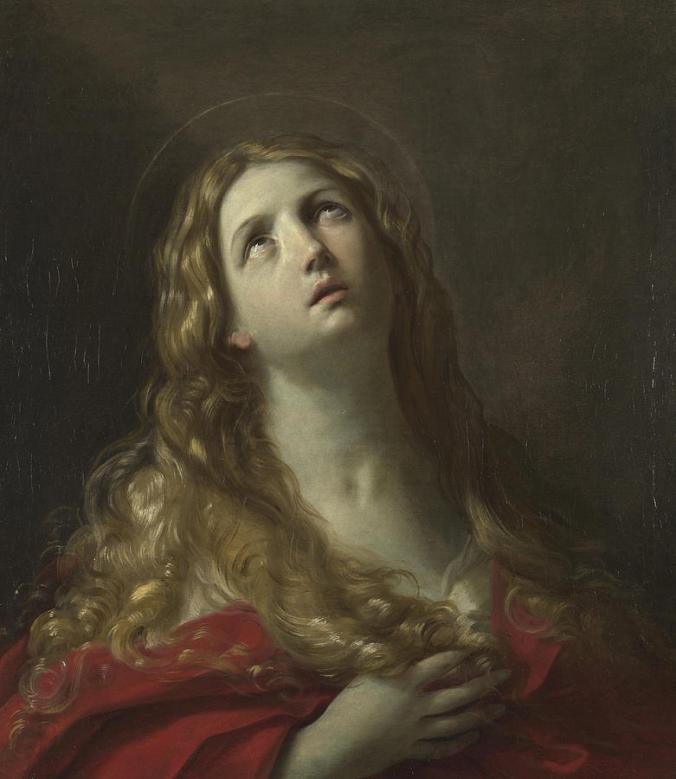
MM by Guido Reni

Mary Magdalene by Guido Reni

Over time, two additional fragments were found, fragments that held parts of the same passages.  In 1917, a Greek fragment was found in Northern Egypt.  It dates to the early 3rd century CE.  Another Greek fragment of approximately the same age and severely damaged, was also found.  Different languages and dates indicate that this is a book that had been copied, so its influence was somewhat widespread.  Also in the mid 20th century, there was a discovery of manuscripts near Nag Hammadi in Egypt, and there were copies of the other texts found with the Gospel of Mary – but no other Gospel of Mary.

At the present time, only these 3 partial copies are known to exist. (Another possible fragment has surfaced, and to my knowledge, its authenticity is still not certain.)  King states “Because it is unusual for several copies from such early dates to have survived, the attestation of the Gospel of Mary as an early Christian work is unusually strong.  Most early Christian literature that we know about has survived because the texts were copied and then recopied as the materials on which they were written wore out.”

MM Dolci Carlo

Mary Magdalene by Dolci Carlo

Today, we may think that the only early Christian texts were those of the New Testament, the Apocrypha, and a few “heretical” gnostic texts found in the middle of a dessert.  (The process of how the books that made it into the New Testament is a whole ‘nuther subject…) Well…there were likely more than that. Christianity – the Gospel, the “good news” – was spread by word of mouth first.  The early Christians had no bible, no catechism, no Sunday school, no confirmation classes, no chain-of-command, no church hierarchy, not even a creed to guide them.  Rather, they had Jesus’ disciples sharing the wonder of their experience of the risen Christ (which sounds more interesting than the creed), and met in homes.  Over time, the Jesus movement spread beyond the Jews to the Gentiles and to other lands…and interpretation doesn’t take place in a cultural vacuum.

Hence, all these gospels and writings were views of Jesus by different groups.  Instead of being fearful of anything “unorthodox,” why not dive into such writings with curiosity?  We have a chance to look at Jesus through different eyes, through the eyes of those much closer to the historic event of the risen Christ. I don’t know about you, but I find that fascinating! (And then, there was the big question of who wrote it down!)

MM sculpture

Artist unknown.  Found at www.juniaproject.com – which looks like an interesting blog.

I wonder what happened with the Gospel of Mary.  The section that exists tells of a scene that takes place after the resurrection, and in it Mary Magdalene is sharing (at Peter’s request) teachings from Jesus that are unknown to the apostles.  They aren’t too happy about that, by the way.  Some of these teachings sound familiar, but some don’t.  Mary comforts the disciples, and begins teaching, sharing what Jesus has shared with her.  Her role as “apostle to the apostles” now includes “teacher of the apostles” through the authority of Jesus.

As such, it underscores the legitimacy of women’s leadership in the early church. While the books that would become the canon were slowly “rising to the top of the heap,” others were fading into obscurity. No one was copying them any more. At the same time, certain strains of Christianity were fighting it out, so to speak, and a hierarchy was beginning to emerge. Can you say power struggle?

I suppose the final blow to Mary Magdalene’s status as a teacher and possibly a church leader came when Pope Gregory I started that nasty prostitute business with a sermon preached in 591 in which he described the 7 demons (that Jesus had cast out of her) as the 7 deadly sins. The fact that some folks kept getting her mixed up with the “sinful woman with the alabaster jar” didn’t help.  The rest, as they say, is history; resulting in a case of stolen identity that not even Lifelock could fix.  For centuries, she has been portrayed as the repentant prostitute rather than a loyal disciple, apostle and teacher.

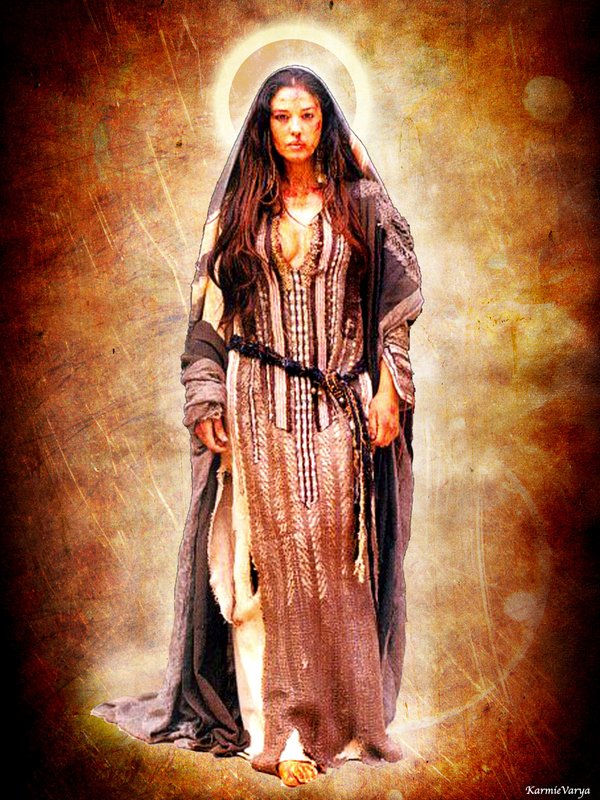
saint_mary_magdalene_by_karmievarya

A woman with a mission! from Karmievarya on DeviantArt.com.

Although the Roman church officially abandoned the prostitute idea in 1969, the damage was deep and long-lasting.  Even today, the image of her as a repentant sexual sinner lingers on. (Just ask Hollywood!)

This isn’t the place for a full discussion of the Gospel of Mary – the work itself is small, and you can find it online (along with plenty of discussion about it).  Karen L. King’s book The Gospel of Mary of Magdala: Jesus and the first woman apostle is not just a translation, it  places the book in historic context and discusses the contents.  There are countless other books and online resources on Mary Magdalene as well.  I can think of no better way to honor this great early Church Mother and Saint by taking some time on her feast day (July 22) to learn more about her, and to let her love for and commitment to Christ inspire our own discipleship.

Singing Bowl 2

I recently wrote about how a singing bowl came into my life.  I’d wanted one for a while, but didn’t really know where to find one, and wanted to choose one “hands on.”  I found the bowl (or rather, it found me) at the Summer NAMM show in Nashville in June.

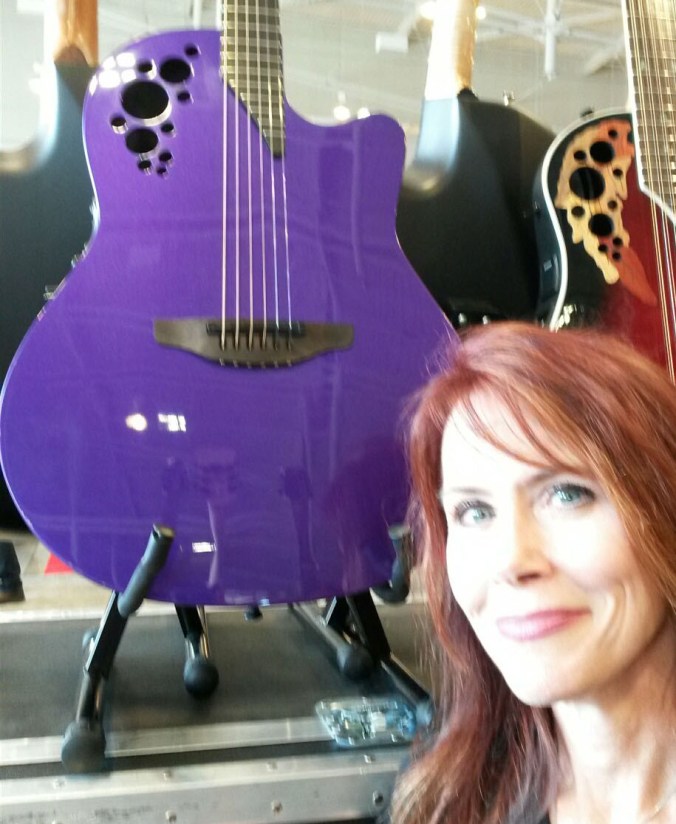
20160623_164641_resized_1

This lovely purple Ovation guitar also found me at NAMM, but unlike the bowl, didn’t follow me home.  whew.

The day I found the bowl was a Friday, and the next afternoon we were scheduled to play a concert featuring selections from Women at the Well at Grace Episcopal Church in Hopkinsville, Kentucky. We left the NAMM show  at 6, ate supper and decided to do a quick practice.  We use backing tracks for some songs and had recently decided to switch to using an iPad for tracks, and wanted to make sure everything went smoothly as technology has a tendency to invite gremlins and other “ghosts in the machine.”

One song (without tracks) is titled Our Father, Our Mother. It has sparse instrumentation, is a paraphrase of the Lord’s Prayer, and is…well, a chant. When I wrote it years ago, it came to me easily and suddenly. I love the song, and love singing it.

We moved quickly through the set, reviewing all songs with tracks first to ensure that the iPad would behave.  So far, so good.

Then, I had an idea.

“Hold on a minute,” I told Bubba, and walked to where the bowl was sitting.  I had just bought it that afternoon, and had been enjoying its tone in a more quiet environment.  I picked up the bowl, struck it, and began singing.

Father, Mother, God, Creator, hallowed be thy name. Upon earth; thy will in heaven, be all things the same….

Bubba joined in on the keyboard.  The bowl was the right pitch for the song.  No wonder this bowl and I got along so well; I was tuned to it. I asked Bubba to keep the keys sparse, and we continued the song.  To my delight, it worked…wow, did it work. What synchronicity!

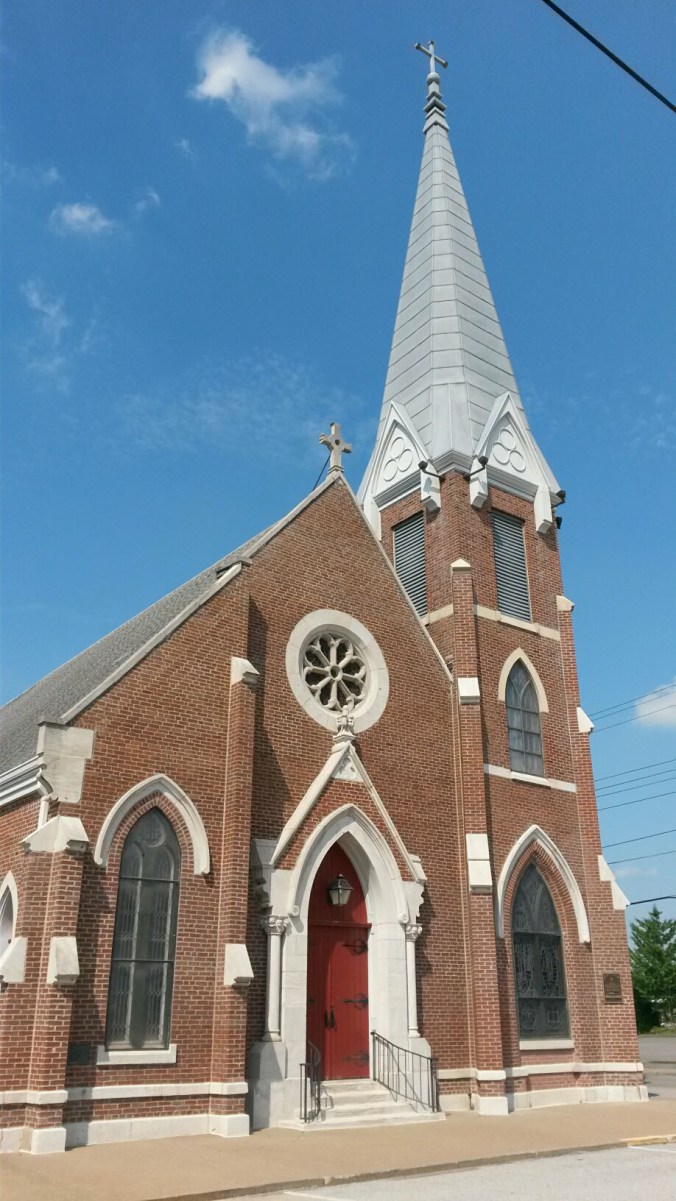
Grace Episcopal Church, Hopkinsville, KY

Grace Episcopal Church in Hopkinsville, KY

The next day, we packed up the bowl along with our instruments and headed to Kentucky. It was an easy drive, a beautiful day, and a lovely church. Rev. Alice Nichols met us, and made us feel most welcome.  I love older churches.  Not only are they beautiful, one can feel the echos of generations of worship deep in the structure itself.  We set up, and the sound of this handmade, prayer-filled bowl filled the church.

setup2

Setting up.

Even the iPad was still behaving!  We relaxed and took in the sights of this lovely church, which included panels honoring church members who had fought in the First and Second World Wars.  The needlepoint cushions at the communion rail were filled with rich symbolism, and the baptismal font told stories of generations of new lives.

20160625_201705_resized

Some of the needlepoint at Grace Church

The evening began with a Eucharist, and then it was time for the concert.

That was the moment that the iPad officially became an iPest.  Or perhaps an iPain.  The volume control, which had behaved perfectly during all run-throughs and tests, vanished. Well, not vanished, exactly, but the dreaded greyed out.  It was visible, but infuriatingly nonfunctional.

It’s times like this that try the mettle of any musician.  Happily, the congregation could all relate to techno-glitches, and when it comes to technology, we have triple-redundant backup readily available…so we switched to the CD player. (I figured that the iPad would find its wayward volume control by the end of the concert.)

In the meantime, it was the bowl’s debut.  One strike, one tone,  and I began to sing. I could feel the vibrations of bowl and voice.  Later comments indicated that others felt the richness of the bowl in that song as well.

At the end of the concert, sure enough – the iPain worked.  We all shared a good laugh, and then a lovely reception with fellowship and good food.

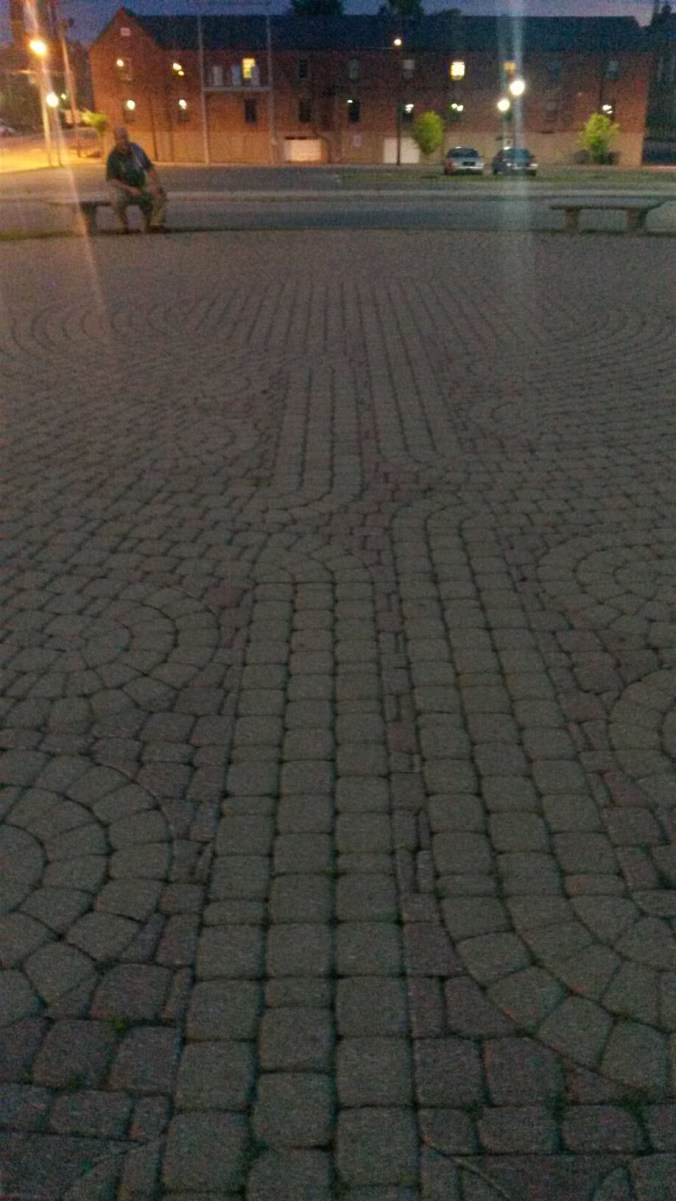
Grace has a beautiful labyrinth across from the church.  Alice and I had originally discussed the idea of performing at the labyrinth, but it had been too hot (and humid) that day. After packing up instruments and gear, we took some time to walk over and enjoy it.  I took a quick walk, breathing in the aftereffects of the concert’s energy.

20160625_203655_resized

Joshua at the labyrinth

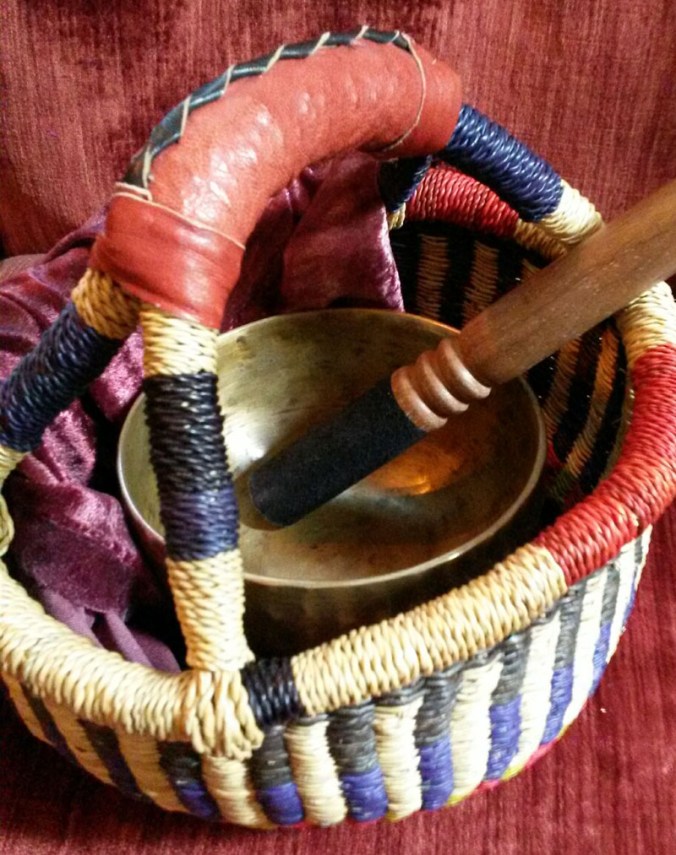
The following day, we packed up and headed south, with a stop at Moony’s Market in Monteagle, Tennessee.  We’d found this delightful health food store / gift and antique and herb / yarn shop on our April visit and performance in nearby Sewanee. Oh, the yarn! Oh, the food! I purchased a small African handbasket – which I later realized was the perfect size for transporting the bowl.  More synchronicity, or at least my subconscious mind at work.

traveling bowl

Ready to travel! And why not? Bowl and basket both have come halfway around the world already!

In addition to bringing me daily beauty and mindfulness, I think this bowl and I are meant to go places and make music together.

God provides.

Someone asked me at a recent church performance, “how did you find us?”

Ah, the wonders of the internet.  I’ve been contacting people for years about Women at the Well. I have used clergy directories, word of mouth, mailed postcards and letters, called, emailed, and have visited many websites to search for and connect with congregations that might be interested in the music and the message of Women at the Well.  Music partner Joshua (aka Bubba) and I have met some wonderful people and visited churches and congregations of various sizes over the years.  I can’t exactly compare us to the early Christians, but hitting the road and visiting other churches, groups and denominations is an awesome experience, and is teaching me whole new lessons about God providing what we need.

Last spring we visited several Unity churches as well as Episcopal churches.  Rev. Sandy Boyer of Unity of Hagerstown, MD helped us to make connections with other Unity congregations – all of this done by distance and online.  I was so happy to meet her and visit in person!  At that time, their congregation was meeting in a temporary space; since then, they have begun meeting in space provided by St. Mark’s Episcopal church in Hagerstown.  While intention, prayer and love can bring holiness to most places, their intention, prayer and love put ripples into the cosmos saying “we’re ready for a new home!” I’m delighted that they have found a space that is more, well, worshipful! God provided.

On that same trip, we also performed at Unity of Palmyra, Pennsylvania.  They were gifted with a church building.  Yes, gifted.  Given.  Someone gave them a building – a church building. This particular church building had been built by a different Christian denomination about a hundred years ago.  That congregation grew until they needed a larger space.  Rev. Julie Vance told us that the church had been purchased by local contractors with the intention of giving it to a congregation.  Other groups had applied for the building, but the Unity congregation received the gift. God provided.

Unity Palmyra

Interior of Unity of Palmyra, PA. They were given this church building. Wow!

I wish I had some better photos, but this should give you an idea of the gift. This was taken as we were setting up and early birds were trickling in for the concert.  (Alas, taking pictures isn’t high on my list when we are setting up and running sound checks – I guess that’s why I don’t have an Instagram account…)

I love the stories of buildings, especially places of worship. They carry the spirit and intention of generations of prayer and community.

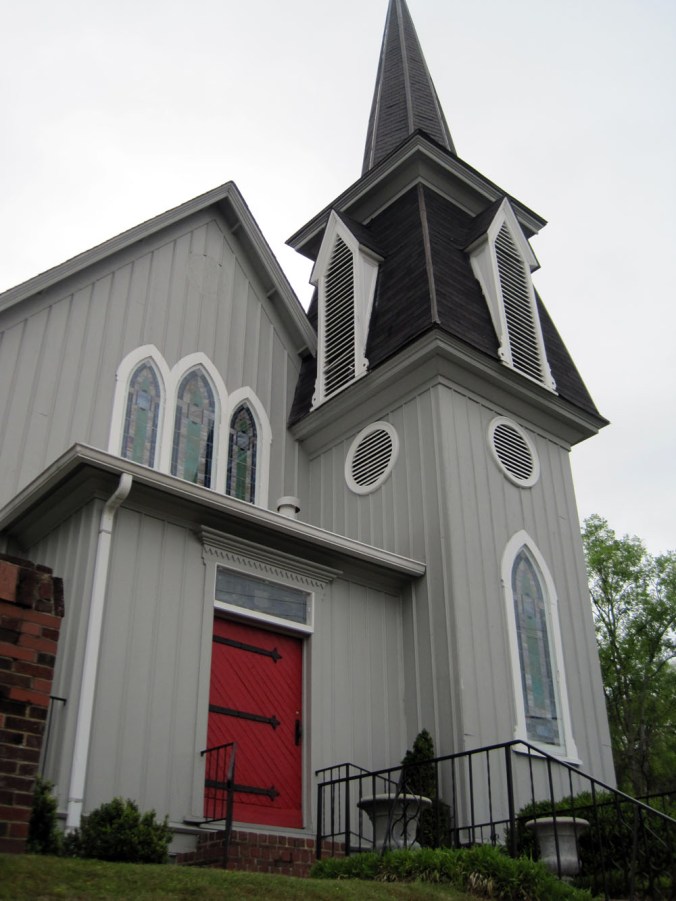
St. James Episcopal Church in Cedartown, Georgia is such a place.  It’s not a big church, and it’s over 125 years old.  In the 1880s, an Episcopalian couple from New York began having Episcopal services in their home.  The congregation grew, raised funds for a church, and the funds were matched by the couple, Mr. & Mrs. A. G. West.  As their home church in New York was St. James, the name St. James was chosen for this church in Cedartown.

st james cedartown exterior

St. James Episcopal Church in Cedartown, Georgia

The current rector of St. James, Fr. Kemper Anderson, came to the priesthood after 3 decades of work as an emergency medical technician, police officer, and Coast Guard Reservist.  We found common ground as he also plays guitar and sings – and while in the Coast Guard, he came to Louisiana to assist with hurricane cleanup and recovery.  His wife Phillipa is a member of a vocal group that I want to hear live one day: Vintage Vocals.  (Heck, I want to sing with them live, too! The CDs will have to do for now, though.)  The congregation didn’t need a building – but the rector seems to be just the right fit.  The blessing works both ways: What a wonderful, welcoming congregation! God provided.

st james cedartown 2

B & B on the Rock at St. James Episcopal Church.  Photo by Fr. Kemper Anderson.

God always provides, but we have to be ready to receive! Sometimes what we’ve prayed for doesn’t look quite like what we anticipated or hoped for, and we might miss it when it shows up. (Then again, there are times that an answer to prayer or a wish fulfilled arrives so quickly and so exactly that you are blown away. Like my singing bowl.)  It’s important to trust, and to keep your eyes and mind open. I think that an attitude of “OK, God, however and whenever you want to deliver it is fine with me, because I know you have it all figured out” is important.  But boy, sometimes that’s a challenge!

I’m reminded of a true story that friend/author/teacher Lynn Woodland shares in her Miracles Course.  A man in one of her classes was praying for “a wonderful relationship with Mary.”  Mary was his wife, and they had been having problems.  They finally wound up divorcing.  He let go of the prayer, because – well, they were divorced, right?  He went on with his life, and over time began dating again.  He met and formed a wonderful relationship with someone new, and his life was richer than ever, in large part because of this relationship.
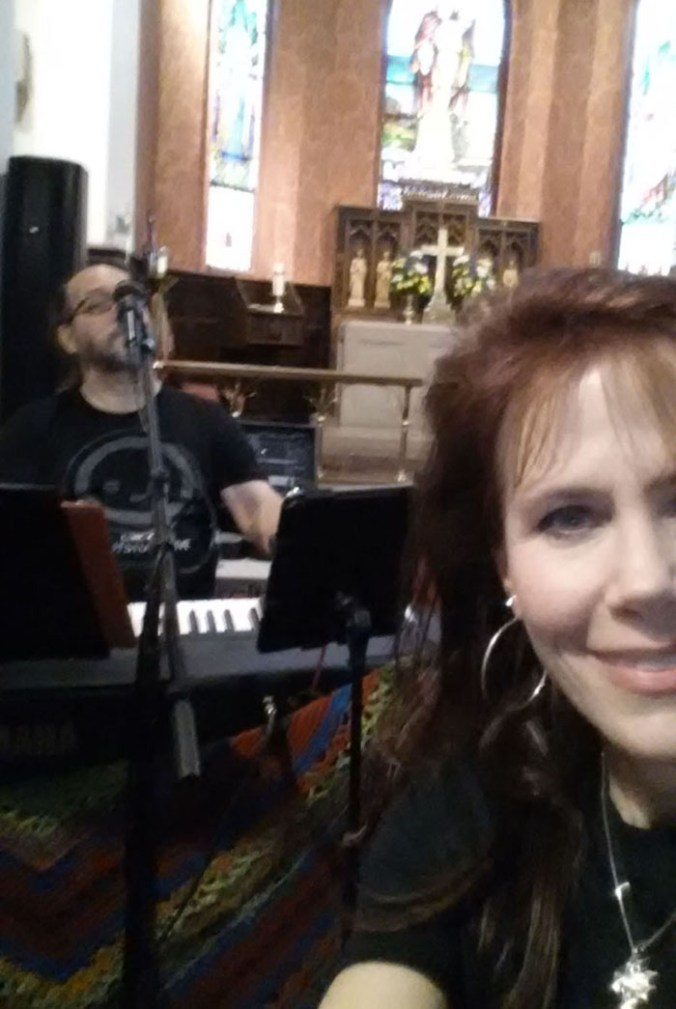
Her name was Mary.

Yes, God has a sense of humor.  And God provides.